
Seen something unusual? MAKE A REPORT
Seen something unusual? MAKE A REPORT

All growers - especially those in Auckland - are urged to be on the lookout for yellow-legged hornets or nests, especially in any hives they may have on their property and report sightings immediately to Biosecurity New Zealand on 0800 80 99 66 or make an online report here.
Biosecurity New Zealand has had a fantastic response so far from the public to the request for help with surveillance. To date, more than 1,000 notifications via email and phone have been received, with no new confirmed finds since the weekend.
Since 17 October, Biosecurity New Zealand has found four confirmed queen hornets and safely removed their nests. Three were detected in Glenfield and one in Birkdale, about 1.3 km from the initial detection in Glenfield.
To support surveillance, Biosecurity New Zealand has 135 traps in the field, placed in a measured way in areas where females have been found.
This is the first time we’ve found yellow-legged hornets in New Zealand – it is a biosecurity concern due to its potential impact on honeybee and wild bee populations. It primarily feeds on bees, wasps, and flies. It may also compete with native insects and birds for food, and it has a painful sting.
This hornet is not a pest of kiwifruit but does seriously threaten honeybees which could impact our access to pollination services. At this stage, KVH is actively monitoring the investigation and considering next steps to act in the interests of growers being able to maintain access to sufficient levels of pollination services in future seasons.
We will keep you updated with any new information on our dedicated hornet detection web page here.
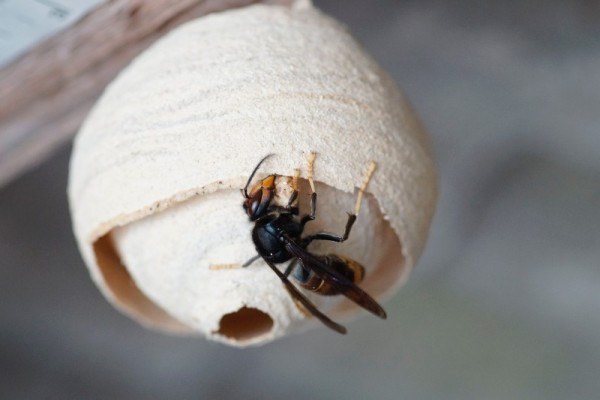
Image: A queen yellow-legged hornet develops an embryo or primary nest (pictured). Worker hornets raised in the primary nest build a larger, secondary nest during the summer. Photo credit: John de Carteret – Jersey.
KVH investigates reports of unusual symptoms to identify and manage any biosecurity risks.