
Seen something unusual? MAKE A REPORT
Seen something unusual? MAKE A REPORT

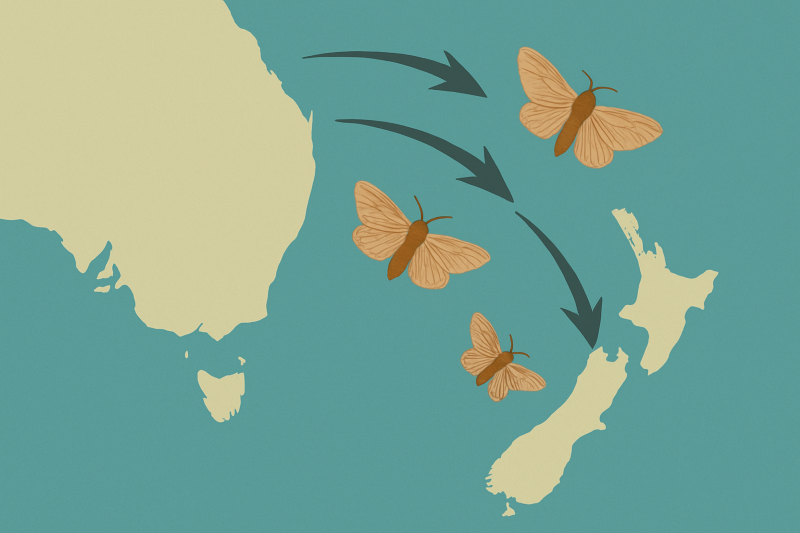
New Zealand’s geographic isolation has long served as a natural barrier against biosecurity threats. Our distance from other land masses means only the most capable airborne species, like certain moths and butterflies, can make the journey here.
Of the more than 1,700 Lepidoptera species already present in Aotearoa, an impressive 87% are found nowhere else in the world.
What might arrive next? The Protecting Aotearoa from Wind-Dispersed Pests programme is working to better understand how pests and pathogens arrive in New Zealand via wind pathways, and to develop a predictive warning system.
By analysing published research, government reports, and observational data, the programme has built a database of non-native Lepidoptera and identified traits common to species that successfully establish here through aerial dispersal. Species to watch tend to have larger wingspans; a history of long-distance migration; and high observation counts on platforms like iNaturalist.
Three species stand out as potential threats to crops and pastures: sugarcane looper, lawn armyworm, and southern armyworm. These moths have been spotted in New Zealand before but haven’t yet established.
However, with enough opportunities to ride the wind across the Tasman, they could eventually gain a foothold.
Why it matters to kiwifruit growers
Moths are the primary pest concern when it comes to windborne arrivals from Australia. Several Lepidoptera species are known to impact kiwifruit, and KVH has been actively working this year to better understand and manage this risk:
KVH investigates reports of unusual symptoms to identify and manage any biosecurity risks.
The KVH portal is now the Zespri Weather & Disease Portal. Access all the weather tools you're familiar with.